










In short
- You need a dehumidifier if the humidity remains consistently above 60% and ventilation and heating do not solve the problem.
- It works well against condensation on windows, musty air, mold caused by humid air, and laundry that dries slowly.
- A dehumidifier does not help with rising damp, penetrating damp, or a leak; address the cause first.
- Choose the capacity based on your room and moisture problem, not automatically the largest model.
Needing a dehumidifier sounds logical if you have problems with moisture, but it is not always that simple. A dehumidifier is a powerful tool against overly humid air, but it is not a solution for every moisture problem. That is why we will honestly explain when it helps and when it is better to do something else.
Moisture is a common problem: mold is found in approximately 10% of homes. However, the cause differs from one situation to another, and that determines whether an appliance is useful. Below, you can read when a dehumidifier is the right choice, when it is not, and what to consider when choosing the capacity. Also take a look at the range of dehumidifiers if you are exploring your options.
When do you need a dehumidifier?
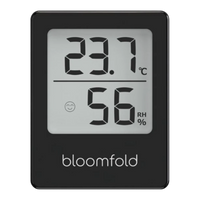
You need a dehumidifier if the humidity remains consistently above 60% and ventilation and heating do not solve the problem. A healthy relative humidity is between 40 and 60%, with around 50% being ideal; above 60%, the risk of condensation and mold increases.
A good rule of thumb is to buy an appliance only when three conditions are met: the humidity is consistently too high, ventilation and normal heating do not solve the problem, and there is no moisture source you can address. If that is the case, a dehumidifier reduces the humidity and keeps it stable.
What does a dehumidifier work well against?
A dehumidifier works well against problems caused by overly humid air. It draws in humid air, extracts the moisture, and blows drier air back into the room. This addresses several common problems:
- Condensation on windows: fewer fogged-up windows in the morning.
- Musty air: a fresher, drier room, for example in the basement.
- Mold caused by high humidity: keeping the humidity below 60% gives mold less chance to grow.
- Laundry that dries slowly: with the laundry-drying function, also known as continuous mode, the appliance continues to extract moisture until the laundry is dry.
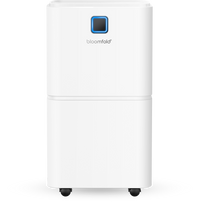
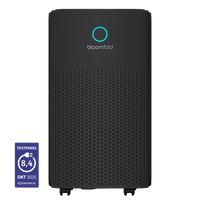
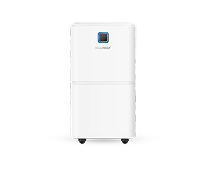
For these situations, a compressor model is a good choice. For example, take a look at the compressor dehumidifiers for use in heated rooms.
When does a dehumidifier not help?
A dehumidifier does not help when the moisture comes from a source other than the air, such as rising damp, penetrating damp, or a leak. In those cases, you are only treating the symptom while the cause continues to supply moisture.
Every type of moisture requires its own approach. Rising damp comes up through the foundation, penetrating damp enters through the exterior wall from outside, and a leak has a specific cause. Therefore, only buy a dehumidifier once you have ruled out a moisture source that can be addressed at its root. If you are unsure, have the problem diagnosed first.
How can you identify where your moisture is coming from?
The location and timing of the moisture problem often reveal its cause. Here are a few signs to look out for:
- Condensation: drops on windows or cold surfaces, especially in the morning and in poorly ventilated rooms.
- Rising damp: damp patches at the bottom of walls, flaking plaster, and salt deposits.
- Penetrating damp: patches on the inside wall that worsen after heavy rainfall, often higher up the wall.
- Leak: a patch that appears suddenly or grows quickly, sometimes around pipes.
If it is condensation, a dehumidifier is often a good choice. You can read more about this in our article on condensation on windows.
Try ventilation and heating first
Before buying an appliance, it is worth trying ventilation and normal heating first, as these often solve minor moisture problems. Ventilation removes humid air and lets drier air in.
In practice, this means opening windows or vents, using the extractor hood when cooking, and using mechanical ventilation when showering. If the humidity remains consistently too high afterward, a dehumidifier is the next step to consider. This way, you do not spend money on an appliance you may not need.
What capacity do you need?
Choose the capacity based on the size of the room and the severity of the moisture problem, not automatically the largest model. Bigger is not always better: an appliance that is too large costs unnecessarily much, while one that is too small will not be sufficient.
Capacity is indicated in liters per day, the maximum amount of moisture an appliance extracts from the air under favorable conditions. As a rule of thumb, a lower capacity is suitable for a bedroom or laundry room, while a higher capacity is suitable for a living room, basement, or attic. Bloomfold carries models with capacities of 12, 16, 20, and 25 liters per day, so you can choose based on the room and the problem rather than gut feeling.
An honest assessment
A dehumidifier is valuable in the right setting, but it is not a miracle cure. If your moisture problem comes from the air, it does exactly what you need. If the cause lies in the wall or foundation, it is at most an addition to a proper repair.
So first identify the cause, try ventilation, and then choose the capacity carefully. If you do not know which model suits your room, use the product finder for tailored advice.


Leave a comment