

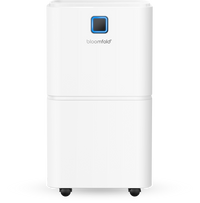


In brief
- In an open kitchen, cooking odors and fine particles spread directly into the living room, with no door in between.
- Cooking, especially baking and frying, causes spikes in fine particles that linger for a long time in well-insulated homes.
- An extractor hood is the first step, but it is often not powerful enough to remove everything.
- An air purifier with a HEPA filter captures fine particles, while an activated carbon filter absorbs odors.
- Using an extractor hood and air purifier together is the best way to keep an open kitchen fresh.
An open kitchen is cozy and spacious, but the smell of fried onions is still lingering in the sofa an hour later. Without a door between the kitchen and living room, cooking odors spread freely throughout the entire space. That is the downside of open-plan living: whatever you cook, the whole room smells it too.
An air purifier in an open kitchen helps make the air fresh again more quickly. Below, you will read why cooking odors linger so long in an open kitchen, what an air purifier does about them, and how to combine it with your extractor hood. Also browse the range of air purifiers if odors in your home are a concern.
Why do cooking odors linger in an open kitchen?
In an open kitchen, you cannot keep cooking odors behind a door, so odors and fine particles spread directly through the living room. There is no enclosed space to contain the steam, so everything released during cooking ends up in your living area.
According to research by TNO, baking and frying in particular cause significant spikes in fine particles in the air. In well-insulated homes, these particles also linger for a long time because there is little airflow. As a result, the air in an open kitchen remains polluted and stale for longer after cooking than you might expect.
Is an extractor hood not enough?
An extractor hood is the first step, but it is often not powerful enough to remove all odors and fine particles, especially in an open kitchen. TNO recommends extraction with a capacity of at least 300 cubic meters per hour, and not every hood achieves that in practice.
In addition, a recirculating extractor hood filters the air and blows it back into the room, meaning some of the fine particles still remain in the home. An extractor hood that vents outdoors works better, but even then, some air remains behind instead of being extracted immediately. An air purifier fills that gap by capturing the particles the extractor hood misses.
Does an air purifier help against cooking odors?
Yes, an air purifier with an activated carbon filter absorbs cooking odors, while a HEPA filter captures the fine particles released during cooking. This tackles two things at once: the odors that linger and the particles you cannot see.
Think of the air purifier as a supplement to your extractor hood, not a replacement. The extractor hood captures steam at the source above the stove, while the air purifier works on the rest of the room, where the cooking odors have already spread. Together, they keep an open kitchen fresh more quickly.
HEPA or carbon: which one handles what?
A HEPA filter captures particles such as fine dust, while an activated carbon filter absorbs odor molecules, and for a kitchen you want both. They perform different jobs, and one does not replace the other.
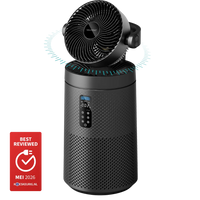
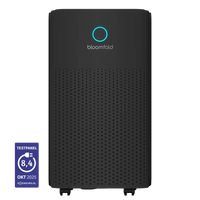
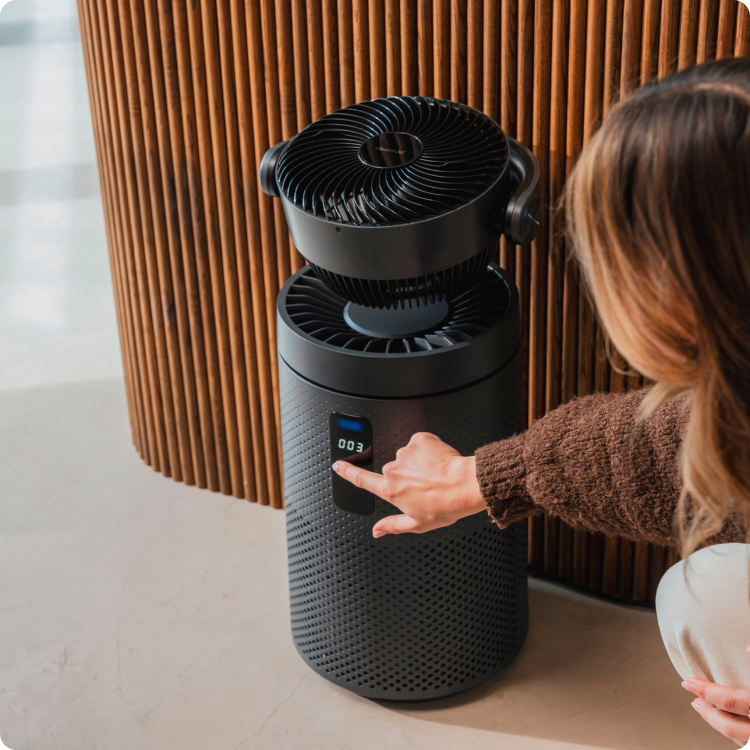
The H13 HEPA filter captures up to 99.97% of fine particles, exactly the particles released during baking and frying. The carbon filter targets the odor molecules that slip through, such as the smell of fish, garlic, or fried onions. The Cyclone combines both in one device, with an H13 HEPA filter and activated carbon. Browse the 2-in-1 models to see which filter type they contain.
How to keep an open kitchen fresh
The best approach combines the extractor hood, air purifier, and good ventilation. A few practical steps that make the biggest difference together:
- Turn on the extractor hood immediately: start extracting as soon as you begin cooking, not only once odors have already appeared.
- Let the extractor hood run: do not turn it off immediately after cooking; let it continue running for a little while.
- Use the back burners: Pans at the back of the stove are better positioned under the extractor hood.
- Turn up the air purifier: a higher setting during and just after cooking processes more air.
- Ventilate after eating: open a window once the steam has cleared so fresh air can enter.
Which air purifier is suitable for an open kitchen?
Choose an air purifier with enough capacity for the combined volume of the kitchen and living room, with both a HEPA and a carbon filter. An open kitchen is considered together with the living room in terms of space, after all, which is a larger volume than an enclosed kitchen.
So calculate based on the total surface area of the open space, not just the cooking area. A generously sized device provides enough air changes to keep up with cooking-related spikes, even on a quiet setting. If you want to know how to choose the right capacity for your space, read more about what an air purifier does.
Fresh cooking in an open kitchen
An open kitchen calls for a tailored approach because cooking odors have free rein in your living space. Combining an extractor hood at the source with an air purifier using HEPA and carbon filtration for the rest of the room keeps the air fresh, even after baking and frying.
Turn on the extractor hood in time, run the air purifier at a higher setting while cooking, and ventilate after eating. This way, you can enjoy the spaciousness of an open kitchen without the smell of dinner lingering all evening.


Leave a comment