









In brief
- An air purifier measurably reduces the number of airborne particles, but you do not immediately feel every effect.
- What you notice yourself depends on the room, how you use the device, and what you expect.
- You can see the first measurable effect within minutes; a noticeable difference in how you feel often comes after a few days to two weeks.
- Not noticing much? It is usually due to a room that is too large, an open door, or a setting that is too low - not the device itself.
- An air purifier filters particles but does not replace airing out and ventilating. They complement each other.
Few purchases raise as many doubts as an air purifier. You cannot see the air becoming cleaner, yet you still wonder whether it works. That doubt is justified, because the honest question is not whether an air purifier does something, but whether you notice a difference at home. Those are two different things.
This page explains what an air purifier measurably does, what you notice in practice, and why some people notice nothing while their neighbor is enthusiastic. Also view the air purifiers range if cleaner air at home is important to you.
Does an air purifier really work?
Yes, an air purifier demonstrably reduces the number of airborne particles, but not every effect is immediately noticeable. This is exactly where the confusion comes from. A particulate matter meter shows the number of particles falling after you switch the device on. Your nose or eyes do not register that like a switch being flipped.
The difference between what a meter sees and what you feel is at the heart of this entire discussion. Research in real homes and buildings shows consistent reductions in particulate matter, usually within a range and rarely completely. That is not a weakness; it is physics: a filter captures the air that passes through it, and the rest of the room follows gradually.
What do you notice concretely at home?
Most people notice less dust on surfaces, fresher air, and less stale odor before they notice a dramatic difference from one day to the next. The effect builds up; it does not overwhelm you.
What people most often mention in practice:
- Less fine dust on cabinets and tables.
- Air that smells fresher, especially after cooking or in a closed bedroom.
- More comfortable breathing during pollen season because pollen and fine particles are filtered from the air.
- More peaceful sleep because a good device is barely audible on its lowest setting.
One customer put it this way: the device had been in the bedroom for two weeks, and the first thing they noticed was no longer waking up with a blocked nose. The sleep mode was so quiet that you could lie right next to it without hearing anything. An air purifier can help reduce symptoms caused by pollen and particulate matter by removing those particles from the air, but it is not a medical treatment and is not a guarantee. If you would like to explore this further, read more about the health benefits of cleaner air.
How long does it take to notice a difference?
You can see the first measurable effect within minutes, but a noticeable difference in how you feel often takes a few days to two weeks. This difference comes from how an air purifier works. The device draws in air, filters it, and blows it back out. The more often the entire contents of a room pass through the filter each hour, the faster the particle levels fall.
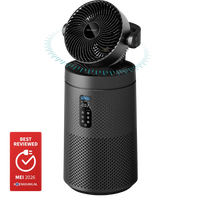
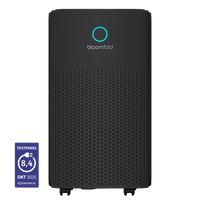
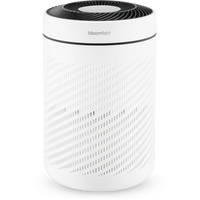
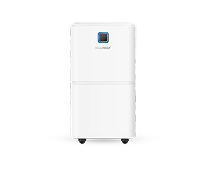
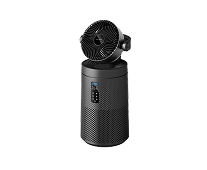
How quickly this happens depends on the device's capacity relative to the size of your room. This capacity is expressed as CADR: the amount of clean air delivered per hour. To illustrate with our own models: the Whisper has a CADR of 250 m3 per hour and is suitable for rooms of up to approximately 25 m2, while the Cyclone reaches 400 m3 per hour and covers up to approximately 50 m2. A device that is generously sized for your room achieves a noticeable result more quickly. If you want to know exactly what happens inside the filter, read what an air purifier does.
Why might you notice nothing while your neighbor does?
If you notice little difference, it is almost always due to the room, an open door, or a setting that is too low - not the device itself. Three causes keep coming up.
The room is too large for the device's capacity. A device designed for a bedroom simply does not achieve enough air changes per hour in a large living room. The particles then fall too slowly to be noticeable.
A door or window is open. As soon as fresh, unfiltered air continues to flow in, the device is constantly playing catch-up. Research in schools and care centers showed exactly this: in rooms where doors were frequently opened and people moved in and out, the effect was clearly smaller than in quiet, closed rooms.
The device is running at too low a setting or for too short a time. An air purifier that only runs occasionally on its lowest setting processes too little air. If you want a noticeable effect, let the device run for longer and turn it up during a peak, for example while cooking and afterward.
Choosing the right size for your room
Choose an air purifier based on the size of your room, not on instinct. This is the most important choice determining whether you notice a difference. The logic is simple: the larger the room, the more clean air per hour is needed to achieve the same number of air changes.
As a rule of thumb, use the stated coverage in square meters. The Whisper and the smaller models are suitable for rooms of up to approximately 25 m2, while the Cyclone, with 400 m3 per hour, can handle up to approximately 50 m2. All models use an H13 HEPA filter that captures up to 99.97% of particles such as pollen, dust, and allergens from the air.
One practical tip: if you want to run the device at a low, quiet setting at night, choose a size larger than your room strictly requires. The highest setting is always the fastest, but also the loudest. With some extra capacity, you can still achieve enough air changes on a gentle setting.
Does an air purifier replace ventilation?
No, an air purifier filters particles but does not refresh the air, so airing out and ventilation remain necessary. This is a persistent misconception. A device that circulates air is not ventilation. Only when fresh outdoor air enters through a vent or window is there genuine ventilation.
The two complement each other. An air purifier tackles airborne particles, such as particulate matter released when cooking and burning candles. Ventilation removes moisture and stale air and brings in oxygen. People spend a large part of their time indoors, and cooking and candles are significant sources of particulate matter in the home. A purifier helps with those particles, but airing out properly remains important as well.
A realistic assessment
Does an air purifier really work? Yes, provided you use it realistically and choose the right size. If you are bothered by dust, pollen, pets, or cooking odors and choose the right size, you will generally notice a difference that justifies the purchase. For people living in a clean, well-ventilated space without specific complaints, the benefit is smaller and mainly preventive.
You are not buying a miracle; you are buying a device that reduces the number of particles in a defined space, provided it is properly sized and used correctly. All models come with a 2-year warranty, which you can extend to 3 years by registering. Unsure which model suits your room? Read the hay fever and pollen guide or view the full range.


Leave a comment