









In brief
- An ionizer positioned before the filters works well. An ionizer that blows ions into the room causes dust to settle on your furniture.
- UV-C can target bacteria and viruses, but in an air purifier it only works as a supplement to a filter, not as a replacement.
- It is best not to use standalone ozone generators that deliberately blow ozone into the room where people are present.
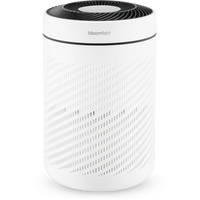
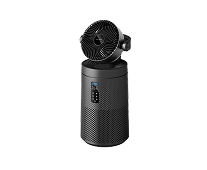
Air purifiers do not all work in the same way. Some rely on filters, while others use techniques such as ionization, UV-C or ozone. There is a lot of confusion surrounding precisely these techniques, and the underlying question is always the same: is an air purifier with an ionizer actually safe? Below, we explain what happens with each technique, what to look out for and why the design of the device matters more than the term on the packaging.
What is the difference between filtering and treating the air?
Filtering physically captures particles in a filter, while techniques such as ionization and UV-C treat the air in a different way. In a filter-based device, air is blown through multiple layers. A pre-filter traps coarse dust and hair, a HEPA filter captures fine particles, and a carbon filter absorbs odors and gases. What the filter traps remains inside the device and does not leave your room.
Ionization, UV-C and ozone work differently. These techniques add something to the air or treat the particles instead of immediately capturing them. That difference determines how effective and safe a technique is in practice.
How does an air purifier with an ionizer work?
An ionizer electrically charges airborne particles, causing them to attach to one another and to surfaces. According to the Consumentenbond, an ionizer is not a filter, but a different way of removing particles from the air. The charged particles become heavier and settle, leaving fewer suspended in the air.
An ionizer is often included as an additional function on an air purifier that otherwise works with regular filters. It is therefore rarely the only technology in the device, but rather an addition to it.
Is an ionizer useful?
That depends on where the ionizer is positioned in the airflow. The Consumentenbond distinguishes between two types. With the first type, the ionizer is located where the air enters the filters. The particles are charged and attach to the filter inside the device. Almost no ions enter your room, and this works well.
With the second type, the device blows the ions into the room. The particles then settle on your walls and furniture instead of inside the device. They are out of the air, but you then have to wipe them away yourself. Most devices with an ionizer are of this second type.
If you want to see which air purifiers rely mainly on filtration, you can find them in the collection.
Is an air purifier with an ionizer harmful?
A good ionizer is not harmful, but there is a risk that ozone will be produced as a byproduct. According to the Consumentenbond, the amount depends on the circumstances. To avoid unintended exposure to ozone, it is preferable to choose a device with the ionizer positioned on the filter side.
Incidentally, no air purifier replaces proper ventilation. A device removes pollutants from the air, but fresh outdoor air remains necessary. Think of an air purifier as a supplement, not a replacement for an open window.
What does ozone do to your air?
Ozone is an irritating gas that can irritate the airways. The US Environmental Protection Agency (EPA) explains that inhaled ozone can strain the lungs and cause symptoms such as throat irritation, coughing and shortness of breath. The Mayo Clinic adds that people vary greatly in how sensitive they are to it.
To some people, ozone smells a little like chlorine, and you cannot always smell it. This makes it difficult to assess, and it is precisely why the amount of ozone emitted by a device really matters. If you have a lung condition, extra caution is advisable.
Why a carbon filter makes a difference
This is the nuance that is often missing from the discussion. If a good device produces a small amount of ozone, a carbon filter can capture it, according to the Consumentenbond. If it works properly, there is little cause for concern in practice. The problem is not the technology itself, but devices without such a means of capturing it.
That explains why the design of a filter-based device makes logical sense. The layers complement one another: a pre-filter for coarse particles, a HEPA filter for fine particles, and carbon for odors and gases. Air purifiers with an H13 HEPA filter capture up to 99.97% of particles, including pollen, dust, allergens and bacteria.
Such a filter becomes saturated over time and must be replaced. Depending on the model and how it is used, you replace it approximately every 4 to 12 months. It is best to keep replacement parts such as HEPA and carbon filters in stock for this purpose.
Does UV-C work in an air purifier?
UV-C can render bacteria and viruses harmless, but in an air purifier it only works well as a supplement to a filter. The reason is the exposure time: air rushes past the lamp so quickly that there is little time to actually deactivate microorganisms. Medical News Today also points out that UV-C must work together with a HEPA filter to be useful.
Furthermore, UV-C itself does not remove dust particles, allergens or odors. That remains the filter's job. The EPA notes that mold spores are also fairly resistant to UV radiation and require more light or longer exposure. UV-C is therefore an addition to filtration, not a replacement for it.
Do not buy a standalone ozone generator
A standalone device that deliberately blows ozone into the room, known as an ozone generator, is best not used in a room where people are present. In October 2023, the NVWA advised against using air purifiers that emit ozone. This advice concerns these ozone generators and, according to the Consumentenbond, explicitly does not apply to devices with an ionizer that treat the air inside the device.
The EPA also warns about marketing that presents ozone as something better than it is, using terms such as "activated oxygen" that suggest it is a healthy form of oxygen. It is not. In California, there is even a legal limit: indoor air purifiers may not emit more than 50 ppb of ozone, and devices exceeding that limit may not be sold, according to CARB. In short, a device that uses ozone as its main technology does not belong in your living room.
What should you look for when choosing?
Choose a device that treats the air internally and captures pollutants in a filter, rather than blowing something into your room. An ionizer or UV-C can be included, as long as it supplements a good HEPA and carbon foundation and is not the only technology. A few specific points to look out for:
- A HEPA and carbon filter as the foundation, so particles, odors and any byproducts are captured.
- An ionizer positioned before the filters, not one that blows ions into the room.
- A certificate or standard showing that ozone emissions remain below a safe level. The Consumentenbond mentions the ECARF certificate and standards such as UL 867-40 and EN 60335-2-65.
If you first want to understand exactly what such a device does before choosing, read what does an air purifier do.
Air purifier or another device?
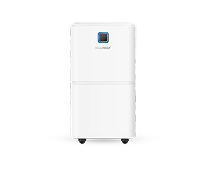
Sometimes an air purifier is not the device you are looking for. If you mainly have problems with moisture, condensation or a musty smell, a dehumidifier is more appropriate. An air purifier tackles airborne particles and odors, but it does not change the humidity. If you are unsure which of the two you need, our overview of what you need can help.
In conclusion
Whether an air purifier with an ionizer is safe therefore does not depend on the word on the box, but on how the device is designed. If it treats the air internally and captures pollutants in a filter, you are in good shape. If it blows something into your room without capturing it, caution is warranted. Pay attention to where the technology is positioned, to the filters behind it and to a certificate that limits ozone emissions. That way, you choose based on what a device actually does, rather than on a term.


Leave a comment