



In short
- The air quality at your workplace is linked to your concentration, alertness, and well-being.
- A quarter of Dutch office workplaces score below standard for health.
- An air purifier with a HEPA filter reduces particulate matter and can contribute to a more pleasant working environment.
- Important: an air purifier does not reduce CO2; ventilation is still necessary for that.
- For a workplace, choose a quiet model that does not disturb your concentration or video calls.
You spend a large part of your day at your workplace, whether that is an office or a home office. The air you breathe there matters, not only for your health, but also for how focused and refreshed you feel while working. Yet that air is often less clean than you might think.
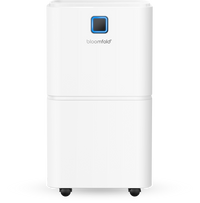
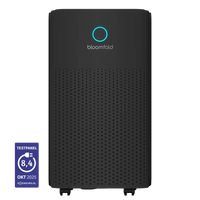
An air purifier in the office or home workplace can help reduce the amount of particulate matter in the air. Below, you will read how air quality affects your work, what an air purifier does and does not contribute, and what to consider when choosing one. Also view the range of air purifiers if cleaner air at your workplace is important to you.
Does air quality affect your work?
Yes, the air quality at your workplace is linked to your concentration, alertness, and overall well-being. Research by the Harvard T.H. Chan School of Public Health shows that higher concentrations of particulate matter and CO2 in office air are associated with slower reaction times and poorer cognitive performance.
There is also room for improvement in the Netherlands. Research by the Vereniging Schoonmaak Research shows that approximately a quarter of office workplaces score below standard for health, with particulate matter concentrations being moderate to poor in more than 40% of cases. A fresher working environment is therefore relevant to many people.
What does an air purifier do in the workplace?
An air purifier with a HEPA filter reduces the amount of particulate matter and airborne particles at your workplace, which can contribute to a fresher and more pleasant working environment. The H13 HEPA filter captures up to 99.97% of fine particles such as dust and pollen.
That is especially beneficial in a space where you sit for long periods at a time. Less dust in the air means fewer particles that you breathe in throughout the day. The device therefore addresses part of the problem, but not everything, and it is important to understand this difference before purchasing one.
Does an air purifier lower CO2 in the office?
No, an air purifier filters particles but does not lower CO2 levels, and CO2 is an important factor in an occupied workplace. When several people are in a room, CO2 levels rise, which is associated with fatigue, headaches, and reduced concentration.
To lower CO2, you need fresh outdoor air: an open window or a properly functioning ventilation system. An air purifier and ventilation therefore do different jobs. The purifier removes particles from the air, while ventilation removes stale air and brings in oxygen. You need both for a healthy workplace; they complement each other.
An air purifier for your home office
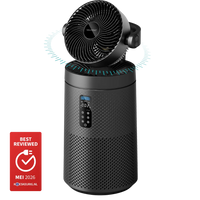
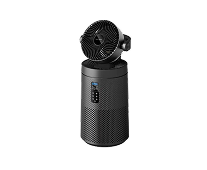
For a home office, a compact air purifier with an H13 HEPA filter and a quiet mode is usually more than sufficient. A home office is often not large, up to about 25 m2, which makes a model such as the Whisper, with a CADR of 250 m3 per hour, a good fit.
Quiet operation is especially important in a home office. You want a device that does not disturb your concentration and stays in the background during video calls. Therefore, choose a model that is barely audible on a low setting while still processing enough air for the room. View the air purifiers to see which model suits your home office.
What should you consider when choosing an air purifier for the office?
When choosing one for a workplace, different factors matter than in a living room. Here are a few practical points to consider:
- Sufficient capacity: match the CADR rating to the room's floor area so that you achieve enough air changes per hour.
- Quiet in work mode: choose a model that is quiet enough on a low setting for concentration and conversations.
- H13 HEPA filter: this filter captures the fine particles you would otherwise breathe in throughout the working day.
- Low energy consumption: a device that runs all day is best chosen for efficiency.
- Carbon filter against odors: useful for odors from a printer, food, or a shared space.
An air purifier for a larger office or business?
For larger office spaces, calculate based on the total volume and choose greater capacity or multiple devices so that you achieve enough air changes per hour. A single small device is not sufficient for a large, occupied space.
For an open-plan office or meeting room, you can distribute several air purifiers throughout the space so that the air is filtered everywhere. Also consider ventilation for CO2, because an air purifier cannot solve that problem. If you want air purifiers for a business or working environment, visit the page for businesses.
Clean air as the foundation for comfortable working
Clean air in the workplace is not a luxury, but a basic requirement for working comfortably and with focus. An air purifier with an H13 HEPA filter reduces fine particles in the air, and together with good ventilation, helps keep the working environment fresh.
Choose a quiet model with sufficient capacity for the space, and combine it with fresh air to manage CO2. This way, you can make your workplace, at home or in the office, a place where you can work comfortably throughout the day. If you want to know how to choose the right capacity, read more about what an air purifier does.


Leave a comment