









In short
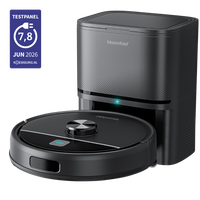
- The Drift navigates with LiDAR and has a self-emptying station, ideal for larger homes and less manual maintenance.
- At 7.3 centimeters, the Sweep is low enough for most sofas and cabinets, and uses simple infrared navigation.
- Both models have a mopping function and can handle pet hair well, as also shown by experiences from customers with a dog and cat.
- Suction power differs: 3500 Pa for the Sweep versus 5000 Pa for the Drift, although that figure does not tell the whole story about the end result.
- The best choice mainly depends on the size of your home and the height of your furniture, not on which model is "better" in general.
What is the difference between the Drift and the Sweep?
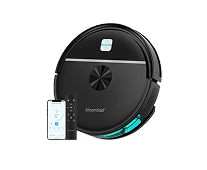
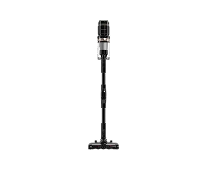
The Drift and the Sweep mainly differ in navigation, suction power, and ease of maintenance. The Sweep is a compact model with infrared navigation, 3500 Pa of suction power, and a height of 7.3 centimeters. The Drift uses LiDAR navigation, has 5000 Pa of suction power, cleans up to 120 square meters per cycle, and comes with a self-emptying All-in-Home Station. Both models have a mopping function and a runtime of more than two hours (130 minutes for the Sweep, 180 minutes for the Drift).
| Sweep | Drift | |
|---|---|---|
| Navigation | Infrared | LiDAR |
| Suction power | 3500 Pa | 5000 Pa |
| Height | 7.3 cm | Higher, due to the LiDAR tower |
| Runtime | 130 minutes | 180 minutes |
| Mopping function | Yes | Yes |
| Self-emptying station | No | Yes, All-in-Home Station |
| Cleans up to | Suitable for smaller to medium-sized homes | 120 m2 per cycle |
View the full range in the robot vacuums collection.
Who is the Sweep the best choice for?
The Sweep is the best choice if you are looking for simple, reliable controls without unnecessary technology. The device works both through the app and with a physical remote control, which is convenient if you would rather not manage everything through a phone.
A family with a dog and a cat uses the Sweep for daily cleaning. They find the controls clear and simple, with the choice between an app and a remote control being a welcome extra. It vacuums excellently for them: pet hair is picked up well, including from rugs. That matches what you would expect from a compact model with a low, wide suction head: it easily gets under furniture and between rugs, exactly where hair and dust collect.
Because of its infrared navigation, the Sweep is best suited to small to medium-sized homes with a straightforward layout. Compared with LiDAR navigation, sensor-based navigation is simpler and requires less maintenance, although it is slightly less accurate, as Tech Advisor explains. For a home with one or two rooms, this is rarely a problem in practice.
Also read why ordinary vacuum cleaners often get clogged by pet hair, and how a robot vacuum handles it differently.
Who is the Drift the best choice for?
The Drift is the best choice if you have a larger home with multiple rooms, thresholds, or carpet, and prefer to spend as little time as possible dealing with the device itself.
A customer bought the Drift for her ninety-year-old mother, who had previously used a robot vacuum from another brand and greatly appreciated its ease of use. When testing it at home, the Drift climbed over thresholds effortlessly and moved smoothly across carpet, to both their satisfaction. The mopping function has not yet been tested extensively by her mother, simply because it is not needed there.
The fact that it handles thresholds and carpet transitions smoothly is in line with what you would expect from LiDAR navigation: a more precise map of the space, allowing the robot to better anticipate changes in floor height.
Why does the Drift navigate your home more intelligently?
LiDAR navigation, like the one used by the Drift, measures the distance to walls and furniture with laser pulses and uses that information to build a detailed map of your home. The map is saved, allowing the robot to follow a logical, straight route during every cleaning session instead of moving randomly around the room. Research by MIT Technology Review into map-based navigation showed at the time that this approach could reduce cleaning time by approximately twenty percent compared with models that drive randomly.
Infrared navigation, like the one used by the Sweep, works more simply: sensors detect obstacles as the robot approaches them, instead of creating a complete map in advance. According to Tech Advisor, this is a perfectly good approach for smaller, uncluttered spaces, with the trade-off that the robot may drive slightly less efficiently than a LiDAR model. In a studio or apartment, that difference is barely noticeable in practice. For a multi-story home or a home with many rooms, that efficiency does matter.
Will the robot vacuum fit under your sofa or cabinet?
At 7.3 centimeters tall, the Sweep fits under most low sofas and cabinets. The Drift is generally taller because of its LiDAR tower and is therefore less suitable for the lowest furniture.
According to the rule of thumb used by furniture specialist Design59, most robot vacuums need at least ten centimeters of clearance under your sofa, measured from the lowest point (not just the front edge, but also any center supports). TechRadar also points out that the raised sensor on LiDAR models is often the deciding factor: without that tower, a robot can be significantly lower. If you have a lot of low furniture at home, measure the clearance first before choosing.
Self-emptying station: how much convenience does it provide?
A self-emptying station mainly saves time in households that vacuum daily, such as families with pets. The Drift comes with an All-in-Home Station; the Sweep does not.
The Drift's station automatically empties the dustbin after each cleaning session, so you do not have to empty it yourself every time. Consumer Reports explicitly mentions this in its test of robot vacuums for pet owners as an advantage for people who vacuum regularly and prefer as little manual maintenance as possible. Tom's Guide does add a caveat: a self-emptying station is a great solution for larger households, but for a small apartment with little dust, the benefit is less significant, and the station also takes up more floor space.
Also check out the accessories for robot vacuums, such as extra dust bags and replacement parts.
Which will you choose: Drift or Sweep?
There is no model that wins in every respect; it is about finding the right match for your home. If you live in an apartment or studio with mostly low furniture, the Sweep is the logical choice: easy to use, low enough to reach everywhere, and controllable via both the app and remote control. If you have a larger home with multiple rooms, thresholds, or carpet, and want as little hands-on maintenance as possible, the Drift offers more convenience with its LiDAR navigation and self-emptying station.
Still unsure? The product quiz will help you find the model that best suits your home in just a few questions.


Leave a comment