










In brief
- Mold in the bathroom is caused by moisture that lingers too long on tiles, grout, and walls after showering.
- Aim for humidity of around 50%. The risk of mold increases above 60%.
- Ventilating during and after showering and drying wet surfaces are essential.
- If ventilation is missing or insufficient, a dehumidifier actively reduces moisture.
- Always place such a device in a dry location, away from the shower, bathtub, and sink.
After every shower, humidity peaks in the bathroom. That is normal. The problem only starts when that peak lasts too long, because mold then has a chance to settle on tiles, grout, and walls. Preventing mold in the bathroom is therefore not about scrubbing harder, but about removing moisture more quickly. In this guide, you will learn how mold develops, at what humidity level the risk increases, and which steps keep moisture under control in the long term.
Why does mold develop in the bathroom?
Mold develops because moisture remains on tiles, grout, and walls for too long after showering. Warm, humid air condenses on cooler surfaces, and that is exactly where mold spores gain a foothold.
The bathroom is the most vulnerable room in the home for two reasons. First, it happens quickly: mold can germinate on a damp surface within 24 to 48 hours. Second, the problem is often found in places you do not immediately see. Mold in corners, around the mirror, or along cold exterior walls almost always indicates condensation on cold surfaces, even if the air in the middle of the room feels dry. The black spots on sealant edges and grout are usually the first visible signs.
At what humidity level does mold grow?
The risk of mold increases once relative humidity remains above 60% for an extended period. Below that threshold, most types of mold struggle to establish themselves on ordinary building materials.
The guideline from the U.S. Environmental Protection Agency (EPA) is to keep indoor humidity below 60%, with 30 to 50% being ideal. This aligns with the rule of thumb we use: ideal humidity is between 40 and 60%, with around 50% as the target value.
It is important to understand that 60% is not a hard switch. Mold does not appear at the exact moment you measure 61%, nor does it disappear automatically at 59%. What matters is duration and surface contact: the longer a surface stays damp, the greater the chance. A brief peak after showering is therefore not a problem, as long as the moisture actually drops again afterward.
Is mold in the bathroom harmful to your health?
Mold is not just a cosmetic problem. Prolonged exposure to damp spaces has been associated with respiratory symptoms.
According to a finding by the CDC, people who spend time in damp buildings experience respiratory symptoms and worsening of existing symptoms more often. This is a general observation, not a diagnosis. If you have health concerns that you associate with dampness or mold, consult a doctor or another professional. The practical message remains the same: the less moisture that lingers, the less opportunity mold has.
Preventing mold or removing it afterward: which works better?
Prevention works better than removal because mold keeps returning as long as the source of moisture remains. Cleaning a surface treats the symptom, not the cause.
This aligns with the EPA's advice on recurring mold in the shower: better ventilation and more frequent cleaning keep the problem small, but the real work lies in removing the moisture itself. We see it the same way. If you keep scrubbing the same grout, you are fighting the consequence. If you bring humidity under control, you remove the foundation mold needs.
How to prevent mold in the bathroom: 5 practical steps
Together, these five steps address the cause. They reinforce one another, so combining them is more effective than relying on a single measure.
- Ventilate during and after showering. Turn on the extractor fan or open the window so the humid air can escape immediately. Let the extractor fan run for a while after showering.
- Ventilate daily. Ventilate the room for at least 30 minutes a day, and create cross-ventilation by opening opposite windows or doors.
- Dry wet surfaces. Wipe down the shower screen and tiles with a squeegee or towel. This removes residual moisture before it can settle in grout and corners.
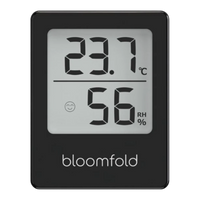
- Measure the humidity. A hygrometer shows whether your post-shower peak actually drops again. Measure each room separately, because the bathroom differs significantly from the rest of the home.
- Actively reduce moisture. If ventilation is insufficient, a dehumidifier or extractor fan can still bring humidity into the safe range.
Would you like to learn more about the right humidity in the bathroom? There you can read how to determine whether your peak is healthy and how quickly it should fall.
Does a dehumidifier help prevent mold in the bathroom?
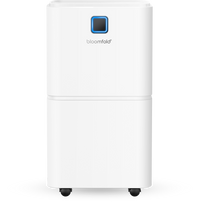
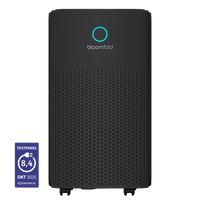
Yes, a dehumidifier helps prevent mold by lowering humidity to within the safe range. The EPA explicitly mentions dehumidifiers as a way to control moisture in the home.
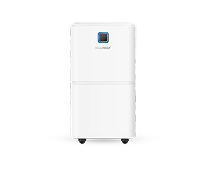
This makes a particular difference in bathrooms without mechanical extraction. A customer with a small 6 m² bathroom without ventilation turned on the dehumidifier while showering. After approximately 45 minutes, the room was dry again. What stood out in the experience was that the desired humidity level was easy to set, the reservoir was easy to empty, and the unit was effortless to move thanks to its wheels. This is exactly the kind of situation in which ventilation alone is not enough and a dehumidifier fills the gap.
Looking for a suitable model? Browse the bathroom dehumidifiers.
Where should you place a dehumidifier in the bathroom?
Place the dehumidifier in a dry, stable location, away from the shower, bathtub, and sink. The device is not splashproof.
That does not mean the bathroom is unsuitable. A dehumidifier works well there against moisture and mold, provided you keep it out of the direct splash zone. A spot away from the wet areas, or just outside the bathroom with the door ajar, is a safe choice. This lets you benefit from the reduced moisture without putting the device at risk.
Which dehumidifier is right for your bathroom?
The right choice depends on the size of the room and the severity of the moisture problem, not on the unit's size alone. Bigger is not automatically better. A unit that is too large consumes unnecessary energy, while one that is too small cannot keep up with the moisture.
A compact model is often sufficient for an average bathroom. If you also have moisture problems in, for example, the basement or living room, a higher capacity makes more sense. The key is to match capacity to the size of the space. Not sure? Browse the broader dehumidifier collection or let the product selection quiz guide you to the right model.
Finally
Preventing mold in the bathroom comes down to one principle: do not let moisture linger for too long. Ventilating and drying wet surfaces are the foundation. Use a hygrometer to check whether your post-shower peak actually drops. And if ventilation is insufficient, a dehumidifier will still bring humidity toward that safe 50%. This way, you address the cause instead of repeatedly scrubbing the same grout.



Leave a comment