









In short
- Proper dehumidifier maintenance keeps your appliance energy-efficient, hygienic, and usable for longer.
- Most dehumidifiers do not have a HEPA filter, but a washable dust filter that never needs replacing.
- Empty the water tank as soon as it is full and clean it about weekly with lukewarm water and mild soap.
- Only 2-in-1 models with air purification have a HEPA and carbon filter, which you replace approximately every 4 to 12 months.
A dehumidifier quietly does its job, so you rarely think about it. Yet proper dehumidifier maintenance determines how efficiently and hygienically your appliance continues to operate. A clean appliance extracts moisture from the air more efficiently, lasts longer, and does not spread unpleasant odors.
Moisture in the home is not a minor issue. Mold occurs in approximately 10% of homes, and a properly functioning dehumidifier is one way to keep it under control. In this guide, you will learn how to maintain the water tank and filters, and why not every appliance requires the same approach. If you are still exploring your options, also view the full range of dehumidifiers.
Why is dehumidifier maintenance important?
Regular maintenance keeps your dehumidifier energy-efficient, hygienic, and usable for longer. A clogged filter restricts airflow, causing the appliance to work harder and use more energy. Dirt and dust on the grilles have the same effect.
There is also a hygiene aspect. Water that remains in the tank for a long time provides a breeding ground for bacteria and unpleasant odors. Maintenance also contributes to the bigger picture of a healthy indoor climate, in which ventilation and dry air work together to make a difference. In short: a clean appliance works better and keeps your air fresher.
Does every dehumidifier have a filter that needs replacing?
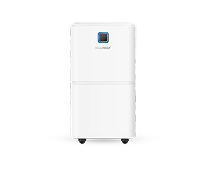
No. Most dehumidifiers do not have a HEPA filter, but a washable dust filter that you simply rinse clean and never need to buy again. This is a common misconception: people think an expensive filter needs to be replaced periodically, while that is not the case with a regular dehumidifier.
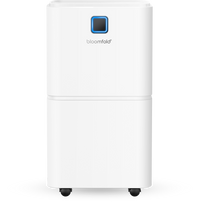
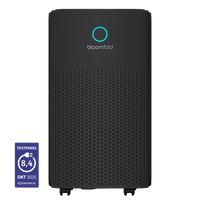
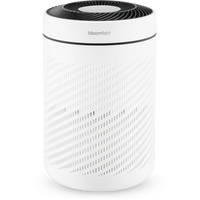
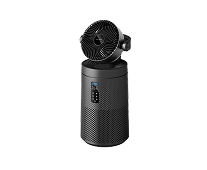
Only appliances that both dehumidify and purify the air have replaceable filters. At Bloomfold, these are the 2-in-1 models in the DryPure range, available in 12L, 16L, 20L, and 25L. If you have one of these models, the HEPA and carbon filter maintenance described below applies. If you have a regular dehumidifier, maintaining the water tank and washable dust filter is all you need to do.
How often should you empty and clean the water tank?
Empty the water tank as soon as it is full, and clean it thoroughly about once a week. When the tank becomes full, the appliance switches off automatically, so you do not have to worry about it overflowing.
Would you rather skip emptying it? Many models have a connection for a drain hose, allowing the water to drain continuously so you do not have to keep emptying the tank. This is useful during intensive use or when using the laundry-drying function, when the appliance continues to operate in continuous mode. To clean the tank, use lukewarm water and a mild cleaning product. Rinse it thoroughly and let the tank dry completely before putting it back.
How to clean your dehumidifier (step by step)
Cleaning itself only takes a few minutes. Complete the steps below and your appliance will be ready to use again.
- Switch off the appliance and unplug it from the wall socket.
- Remove the tank, discard the water, and rinse it. Then dry it thoroughly.
- Wipe the housing with a slightly damp cloth and remove dust from the grilles, for example with a vacuum cleaner fitted with a soft attachment.
- Remove the dust filter from the appliance and rinse it under lukewarm water. Let it dry completely.
- Put the dry filter and tank back in place and switch the appliance on again.
Use: lukewarm water, mild soap, or diluted vinegar on a cloth. Do not use: bleach, acetone, or abrasive cleaners, and never spray liquid directly onto the electronics. This safe approach prevents damage to the plastic components and circuit board. Also, do not place the appliance directly against a wall or curtain, so that airflow remains unobstructed.
What do the filters in a 2-in-1 dehumidifier do?
The 2-in-1 models combine dehumidification with air purification. This air purification uses several technologies, each of which does something different. Below, you can read briefly about the functions of a HEPA filter, carbon filter, and ionization.
What does a HEPA filter do?
An H13 HEPA filter captures up to 99.97% of fine particles from the air, such as pollen, dust, and allergens. This standard refers to particles measuring 0.3 microns, precisely the size that is most difficult to capture. The filter retains anything larger or smaller even more effectively.
Pay attention to the classification when purchasing. Terms such as "HEPA-type" or "HEPA-style" do not indicate genuine HEPA filters and provide less effective filtration. The EN 1822 standard determines what a filter may genuinely be called.
What does a carbon filter do?
A carbon filter absorbs odors and gases that a HEPA filter does not capture. The activated carbon binds odor molecules and holds onto them. A HEPA filter captures particles but not gases or odors, so the two complement each other. The carbon filter becomes saturated over time and must then be replaced.
What does ionization do?
Ionization causes airborne particles to clump together, making them easier for the filter to capture. The appliance electrically charges the particles, causing them to form larger clusters that are retained more effectively. It is an additional step on top of the filters, not a replacement for them.
How often should you replace the filters in a 2-in-1 model?
Plan to replace them approximately every 4 to 12 months, depending on the model and how intensively you use it. In a dusty room or with daily use, you will replace them sooner than in a clean room where dehumidification is only occasional.
Important distinction: the washable pre-filter does not need replacing; you simply rinse it clean. Only the HEPA filter and carbon filter are consumable parts. Replacement filters can be ordered separately via the spare parts page. You can add the replacement date to your calendar, so you stay on schedule without having to think about it.
Maintenance and healthy humidity go hand in hand
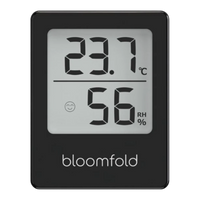
Maintenance is not an end in itself. A clean appliance keeps your humidity stable, and that is ultimately what matters. Healthy relative humidity is between 40 and 60%, with around 50% being ideal.
That range is not arbitrary. Above 60%, mold spores have the opportunity to germinate. With regular maintenance, your appliance can reliably keep humidity at that level. If you would like to learn more about the right levels, read more about the ideal humidity in the home.



Leave a comment