









In short
- A robot vacuum excels at consistency: it keeps your floors clean every day without requiring any of your time.
- A regular vacuum remains essential for stairs, edges and corners, upholstery, and thick carpets.
- Most households are best served by a combination: the robot for daily maintenance and a regular vacuum for everything else.
- If you mainly have hard floors, little carpet, and no stairs, a robot vacuum can go a long way.
- A robot vacuum does not fully replace a regular vacuum; it mainly takes the daily work off your hands.
What does a robot vacuum do better than a regular vacuum?
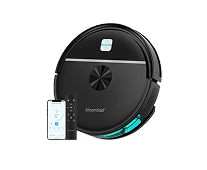
A robot vacuum excels at consistency: it keeps your floors clean every day without requiring any of your time. Everyday Home Comfort calculates that a robot vacuum saves an average household around two to four hours of manual vacuuming per month, simply because it runs autonomously while you focus on other things.
That advantage is not about raw power, but about frequency. A floor that gets a quick clean every day collects less dust and hair than a floor that is thoroughly cleaned once a week. For daily maintenance, this is often more effective than vacuuming occasionally with a lot of power.
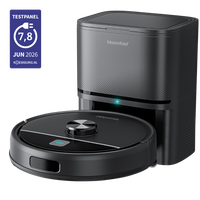
View the full range in the robot vacuum collection.
What can a regular vacuum do that a robot vacuum cannot?
A regular vacuum remains essential for stairs, edges and corners, upholstery, and thick carpets. Robotin explicitly identifies these as tasks that a robot vacuum was fundamentally not designed for: no robot can climb stairs, and with corners and edges, a round model often misses that final bit. For a sudden large mess, such as a spilled box of cornflakes, a regular vacuum is also a matter of seconds, whereas a robot is not designed for that.
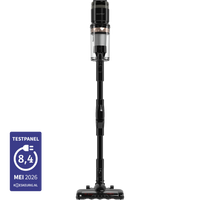
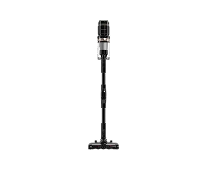
Everyday Home Comfort also points to a practical limitation when it comes to carpets: robot vacuums struggle with carpets thicker than around twenty to twenty-five millimeters. For these tasks, a vacuum such as Bloomfold's Swift, with 120 AW of suction power and a 350W motor, is a logical addition alongside your robot vacuum.
View the full range of vacuums in the vacuum collection.
Do you need both?
For most households, yes. Vacuum Doctor concludes that most people are best served by a combination: the robot for daily maintenance and a regular vacuum for weekly deep cleaning and hard-to-reach areas such as stairs and upholstery.
Home Vacuum Zone sums this up in a simple model: the robot vacuum handles most of the daily surface maintenance, while the regular vacuum takes care of the remaining occasional deep-cleaning tasks. Do not see them as competitors, but as two appliances that complement each other.
Who can get by with just a robot vacuum?
For people who mainly have hard floors, little carpet, no stairs, and no heavy pet-related mess, a robot vacuum can go a long way without a regular vacuum being needed every day. In an apartment with mainly laminate or tile floors and a single area rug, you are unlikely to need the regular vacuum very often.
When does a regular vacuum remain essential?
For stairs, thick carpets, upholstery, and large sudden messes, a regular vacuum remains the most reliable choice. If you live in a home with multiple floors, thick carpets, or a lot of upholstered furniture, a robot vacuum is a valuable addition, but not a complete replacement.
Two appliances, two tasks
A robot vacuum and a regular vacuum do not replace each other; they work together. The robot keeps your floors clean every day without you having to think about it, while the regular vacuum steps in where the robot simply cannot reach or is not powerful enough. If you know that in advance, you will buy a robot vacuum with the right expectations, which can prevent a lot of disappointment afterward.
Not sure which model suits your situation? The product quiz will help you get started.


Leave a comment